Dear hustlers, founders, operators and visionaries,
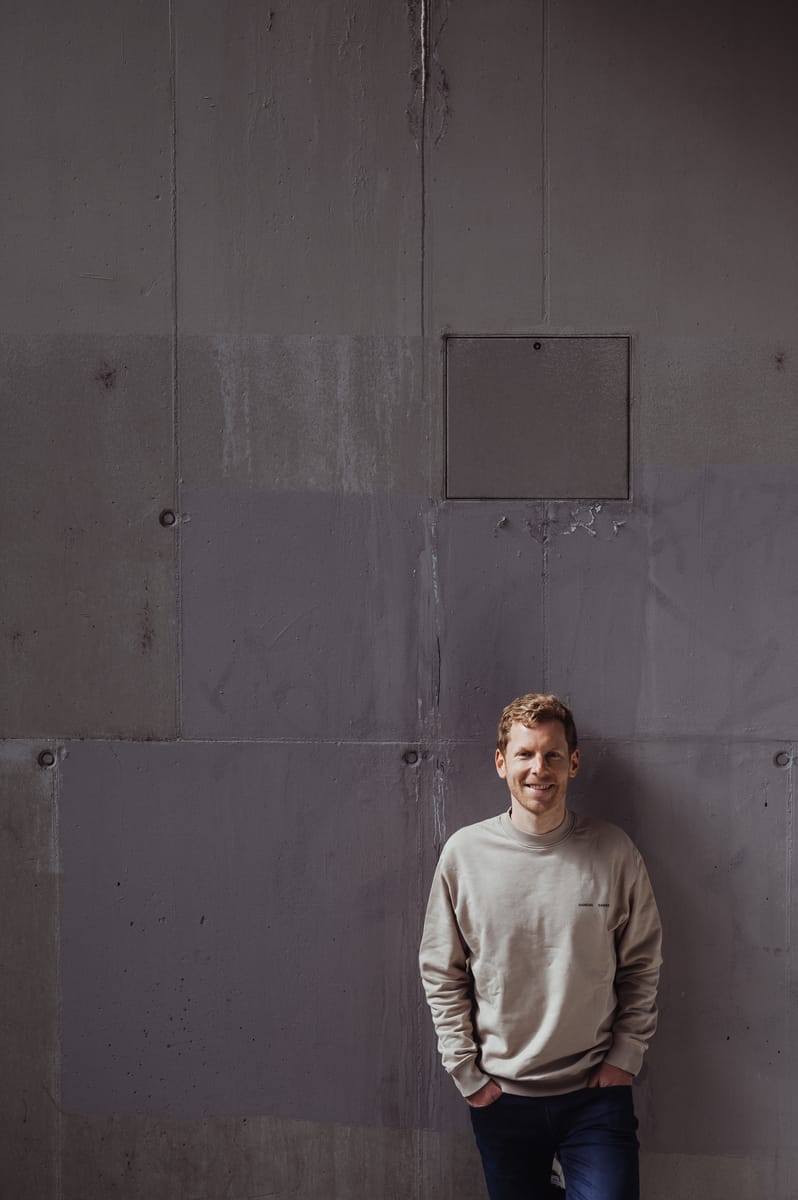
Today’s guest is Tom Wehmeier, Partner at Atomico, who leads the State of European Tech report, now in its 11th edition, covering thousands of founders and billions in capital flows. He sits at the intersection of data and deployment, backing European scale-ups while tracking the structural shifts shaping the ecosystem.
🎧 Tune in now on Spotify, Apple, YouTube and share your thoughts! In the meantime: Follow the Gradient and stay tuned!
PS: Has this e-mail been forwarded to you? Sign up here.

Why you should listen
You should listen to this if you are building in Europe and want to understand where momentum is real, where friction still slows you down, and why fragmentation can be a moat rather than a handicap.
As the conversation unfolded, the real tension became clear: Europe now has talent depth, ambition and capital formation, but still risks losing companies at scale due to capital markets, risk culture and structural complexity.
What we talk about
00:00 Introduction
03:07 Europe's ecosystem fundamentals have never been stronger
10:51 Where the friction shows up: go-to-market and fragmentation
13:21 What will improve soon vs what founders must design around
17:09 Europe's 4.6 million tech workers and where the talent advantage breaks down
19:52 The compounding talent flywheel across generations
24:38 Why 30% of companies relocate abroad at Series C
28:45 The pension fund bottleneck: perception, regulation, and talent
37:20 What breakout European companies do differently
43:59 Rapid fire
Our main take away’s
Europe’s fundamentals have never been stronger, but belief remains fragile. Talent density, capital sophistication and ecosystem connectivity are at record levels, yet sentiment still swings with macro cycles and risk appetite. Narrative and conviction, not infrastructure, are now the limiting factors.
AI is not a single race and Europe is better positioned than the narrow model narrative suggests. While US model companies dominate headlines, Europe is building globally competitive players across voice, image, autonomous driving, healthcare and manufacturing. The opportunity will compound over decades, but only if capital can concentrate behind winners at the scale of tens of billions.
Fragmentation slows execution, but it also builds resilience. Cross-border hiring, legal setup and compliance create drag that impacts runway and sales velocity, especially with slower procurement cycles. Yet companies like Spotify and Booking turned European complexity into operational strength that later became a global advantage.
Talent is compounding inside the ecosystem, but senior depth still lags the US. Europe now has 4.6 million tech workers and a growing share choosing startups over megatech and corporates, reinforcing the flywheel. However, executive-level scale-up experience remains thinner, which makes retaining and attracting global leaders critical at the 500+ employee stage.
Capital markets and pension allocations are the structural unlock. European pension funds under-allocate to venture due to perception, regulation and lack of in-house capability, despite evidence that US companies exit at higher rates and recycle talent and capital faster. Without deeper local growth capital and public markets, headquarters relocation will continue as companies scale.
How to reach out to Tom and additional material
Exclusive from Tom
If you could give every European founder one practical change to make in the next 90 days to improve their fundraising odds, what would it be and why.
Hard to generalise on this one. But one thing that is always going to improve conversion odds is placing the right emphasis on curating investor engagement based on potential investor-founder/company fit, i.e. investing time to filter based on perceived alignment of ambition, approach, and stage.
You work with data driven founders every day. What is one metric or signal early stage teams consistently underrate when assessing whether they have real product momentum.
It’s easy to be misled by user counts when what really matters is how they’re using the product. Are they truly engaging deeply, are they coming back, are they using it in unexpected ways? These are much stronger indicators of product-market fit than the headline user growth.
Based on the companies that scaled fastest in this year's report, what is one specific thing they do in the first twelve months that most European companies wait too long to implement.
Define operating culture with a clear set of values or principles from the outset.
Decisiveness. Acting quickly on talent, both not hesitating to invest in exceptional people even if it feels expensive, but also not delaying the hard calls when the signals indicate it’s not working.
If you think about Europe’s fragmented regulatory environment, what is one strategy you have seen founders use to turn this fragmentation into an advantage rather than a drag on speed.
Adyen, Booking.com , Spotify or Perk are all examples of European companies that turned fragmentation into a competitive advantage, through capturing the complexity and turning into a product advantage and also core business resilience.
What is success for you?
A simple idea of success for me is someone or something reaching their full potential. A person or a business that becomes the best version of what they were capable of being.
What books, podcasts, articles inspired you?
Hans Rosling (Factfulness author and data-driven storytelling genius!). He rejected the label of optimist (strangely, some people didn’t like that he told positive stories!), instead calling himself a "possibilist". This is someone who neither hopes nor fears without reason, and who resists an overdramatic worldview. But what I love most is he framed the role of data as necessary, but not sufficient. As he put it, "the world cannot be understood without numbers. But the world cannot be understood with numbers alone." That balance is something I try to carry into my own work with data.
What’s one advice, founders should actually ignore?
Ignore any advice that starts with "you should." Unless someone has been in your shoes or has full context, binary directives are just noise. The best advice is always framed with humility and nuance, i.e. "in my experience, this worked for me, but here's the context behind it."
What are habits, activities or rituals that keep you sane (while scaling your business)?
There is always something to be learned in every experience. When things don’t go to plan, find the lesson, appreciate the silver lining, move on quickly.

Follow the Gradient is a weekly newsletter and podcast by the serial founders Melanie Gabriel & Christian Woese about how to scale a business from Europe while staying sane.
You have full control over what we send to you. We sent a weekly rundown on Tuesdays, and our podcast brief on Thursdays. If you do not want to receive this Thursday one, you can change this in the email preferences below.