Dear hustlers, founders, operators and visionaries,
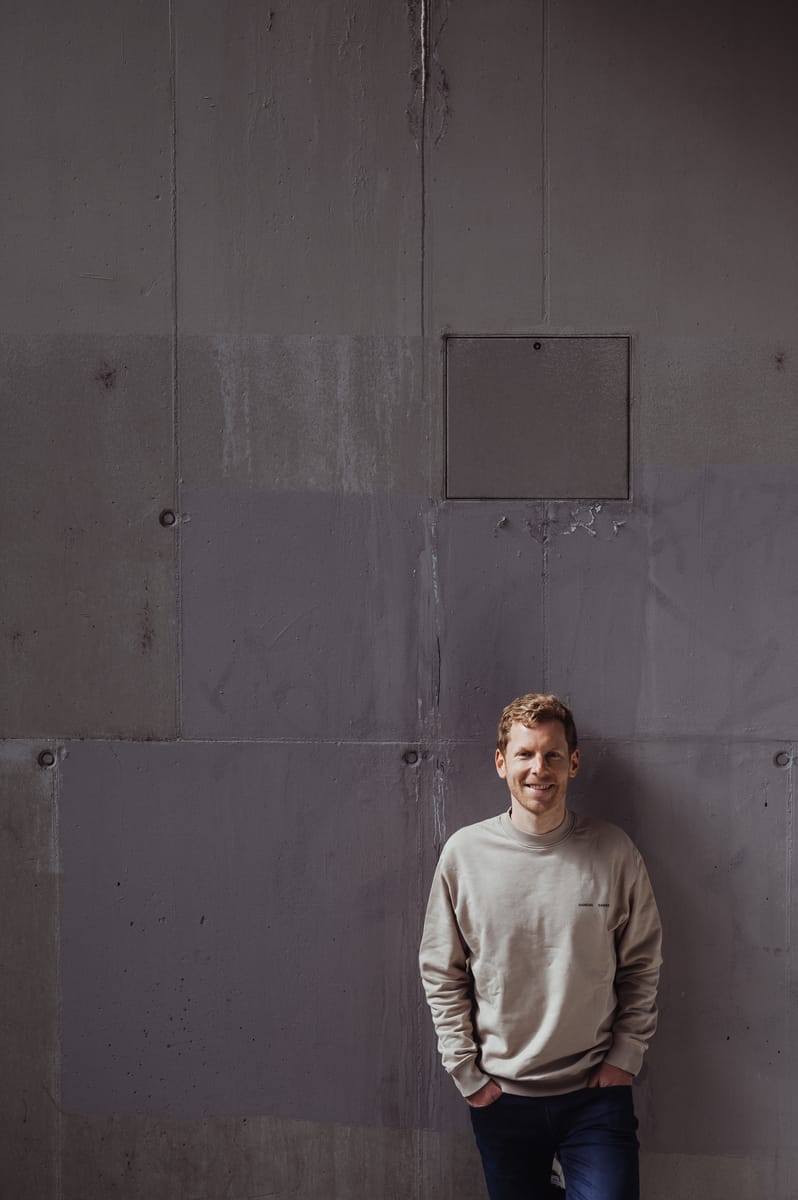
Today’s guest is Nicolas Autret, Partner at Walden Catalyst, who has spent over two decades investing in deep tech across firms like 360 Capital and Samsung Catalyst Fund. He has backed more than 600 companies across semiconductors, AI, and robotics, with a focus on building global category leaders from Europe.
🎧 Tune in now on Spotify, Apple, YouTube and share your thoughts! In the meantime: Follow the Gradient and stay tuned!
PS: Has this e-mail been forwarded to you? Sign up here.

Why you should listen
You should listen to this if you want to understand why Europe produces world-class deep tech but still struggles to scale and capture value globally.
As the conversation unfolded, it became clear that the real constraint is not talent or ideas, but late-stage capital and proximity to customers.
What we talk about
00:00 - Introduction
01:38 - CVC vs financial VC: what actually works for deep tech companies
04:53 - Inside the Graphcore story: from European darling to SoftBank exit
09:05 - Europe's late-stage capital gap: 70% from non-European investors
13:55 - The flywheel that isn't spinning: exits, recycling, and reinvestment
15:13 - What European deep tech founders should actually do right now
20:28 - Deep tech resilience: only 4% below peak while regular tech crashed
26:50 - University spin-outs: why fragmented IP processes hold Europe back
29:18 - Munich, Zurich, Cambridge: why regional clusters matter
33:22 - What must happen in 10 years for European deep tech to win
Our main take away’s
Europe’s deep tech gap is not at the start but at the finish line. Early-stage funding is strong, but 70% of late-stage capital comes from non-European investors, which shifts control and outcomes abroad. This matters because deep tech companies require hundreds of millions over long timelines that local funds cannot yet support.
Graphcore failed to keep pace with exponential model growth, not because of weak technology but because of capital and system-level constraints. Training workloads scaled from millions to trillions of parameters, forcing constant chip redesigns that cost $10–20M per tape-out. At scale, the bottleneck shifted from chips to full-stack systems where Nvidia already had a multi-year advantage.
Deep tech success depends on proximity to customers, not just talent. Many European founders build far from hyperscalers like AWS or Google, slowing feedback loops and product iteration. This creates a structural disadvantage where roadmaps drift from real market demand.
Corporate Europe is underutilized as a growth engine. Only 15% of M&A value comes from European corporates, while US companies capture 75%, limiting the local flywheel of capital and talent recycling. Without active buyers, fewer founders reinvest and fewer operators start new companies.
Europe’s advantage is talent density but it must be paired with speed and ambition. The continent produces more STEM graduates and top research than the US, yet founders often move slower and aim smaller. At scale, this gap compounds as US companies iterate faster and capture global markets first.
Additional material from our conversation with Nicolas
How to reach out to Nicolas
Exclusive from Nicolas
In deep tech, companies often spend years building technology before becoming real businesses. In your experience, what is the moment when a deep tech company actually becomes a real company and not just a research project anymore?
There are a couple defining points in my view.
First, when the founding team identifies a market pain point that can be solved through the research/science that team is working on, assuming the pain is big enough customers will be willing to pay for a solution, and that the opportunity at stake can be significant enough to build a large company.
Second, when the potential offered by that market opportunity creates enough excitement that value-add individuals, whether experienced operators or investors, will be interested to join the project and bring it to life.
Lastly, when the company signs first pilot projects or first customers, the Founders can finally say “this is real, it was not just a figment of our imagination. Let’s make it happen now”
What is the hardest transition for deep tech companies – from research to product, from product to customers, or from customers to scaling the business? And how do they get it right?
Entrepreneurship is hard, at every single step of the journey. But the problems you have to solve are different.
At the research phase, you have to make the underlying technology work, which requires creativity, hard problem solving, trials and errors, and oftentimes a lot of frustration on the way.
At the product phase, it is about market research, understanding customer pain points, how severe and how big they are, the current solutions addressing them and how your solution differentiates, assessing the customer appetite for your solution. This is not about science anymore, but building a product around it that can capture a big market opportunity.
At the commercial phase, it is all about customer centricity, and customer delight. You have to build an organisation that will reach out to your target customers, build credibility and trust to win them over, and ensure customer success to have your commercial flywheel spin faster and faster. The organisation you build along the way is like a living organism, it will change over time: different backgrounds, from science-heavy in the early days to commercial-centric in the scale up phase; your culture and processes will also change as you grow your organization. The leadership may also change, with the Founding team sometimes staying in tech-centric roles and experienced operators joining to lead commercial development of the company.
This is why I always approach my investor role with humility, as the ones doing the real hard work are the Founders, not the VCs. VCs are here to support, share learnings from past investments, connect with value-add individuals, but certainly not to lecture Founders on how to build a company.
What is something European deep tech companies need to learn from American companies when it comes to scaling? And what should they actually ignore?
I often talk about speed and scale. I have been travelling regularly to Silicon Valley for the last 15 years now, usually twice or three times a year, and I am always impressed by the sense of urgency American founders have, and how big they think. Of course, they live in an ecosystem that is large enough on its own already and that allows them to think big. They are also surrounded by a very dense ecosystem of operators and investors that allow them to execute faster on a vision. While I don't think Europeans should try to replicate Silicon Valley - which is the outcome of decades of maturation in a unique ecosystem that combines world class academia, entrepreneurs, investors and corporates in one single geographic location - I still think we should embrace Silicon Valley’s best practices, particularly embrace this culture of speed and scale. While relocating European companies to the US is no longer an absolute must, having a significant commercial US presence remains nevertheless critical, this is where most customers of deep tech companies are. But something has changed versus 15 years ago, European founders now want to build independent global leaders out of Europe. We have incredible talent, we have ambition, we have capital (even though we could do with more domestic late stage funding). As an ecosystem, we need to double down on this and keep working on removing the barriers to innovation.
From a board perspective, what is something founders and management teams of deep tech companies often misunderstand about investors or boards?
I have seen many founders (rightfully) celebrate "technical firsts", i.e. solving a complex engineering hurdle or hitting a specific laboratory benchmark. While impressive, a board cares primarily about value inflection points. In other words, how these «technical firsts» translate into market validation or market pull.
Another misalignment is that the «investor clock» is not necessarily in sync with the «R&D clock». Deep tech founders often feel they are in a race against physics. VCs, however, are in a race against their fund lifecycle, which is a 10-year time horizon. In other words, if a Founder is in Year 4 of R&D and the VC that invested in is in its 8th year, there will be high pressure to trigger a liquidity event, not because the investor does not believe in the technology or the team, but because the VC needs to return liquidity to its own investors. When accepting a term sheet from an investor, it is therefore critical to understand where that VC stands in its investment cycle.
Lastly, the Board should be seen as a «risk mitigation engine», not a science fair. Founders often approach board meetings as a presentation to a thesis committee. They want to show how smart the solution is. In reality, a board's primary fiduciary duty is risk management. Board directors are scanning for financing risk (when are we running out of money?), the execution risk (do we have the right people for the job?), or the market risk, and asking for/offering mitigation measures.
Deep tech companies often take 10–15 years to build. How do you build companies and teams that can survive such long time horizons?
My recommendation here is to make sure there is alignment. Deep tech is a game of patience, capital intensity, and resilience. Entrepreneurship is not a straight line journey, and will never be. This is particularly true in deep tech, as development cycles are longer than in regular tech. You need to wait years before seeing the first dollar of income. In the meantime, you can go bankrupt multiple times, or find out that the technology just does not work. In summary, this is not a journey for the faint-hearted.
The last thing a Founder wants is to lose trust from VCs during one of the many setbacks he/she will have to go through. Or have to tone down the unjustified excitement of VCs during one of the many in-between successes that are part of the entrepreneurship journey. Ups and downs are part of the journey, you of course need to celebrate successes but need to stay calm in the storm when it happens.
This is why alignment is so critical. Founding teams need to pick VCs who understand their grand vision; VCs with tech and market knowledge so that the Founding team has a partner at the table who understands the development process that the company will go through, and who adds operational value. Finally, Founding teams need to pick VCs who have deep pockets; as deep tech projects take a lot of time to come to maturity, Founding teams need to know they can count on their VCs to refinance them when required.
What is success for you?
Professionally, success takes two dimensions in my view.
#1, generating best in class returns for our LPs, this is really what we are paid for. We owe it to our LPs who trust us with their money. I would argue many of the less experienced investors forget that VC is not about LinkedIn posts celebrating the last rounds of their portfolio companies. Generating top cash-on-cash returns takes time and requires a lot of hard work. Closing and announcing a round is the easiest part of the job really, and only the beginning of a long journey.
#2, seeing portfolio companies scale, become recognized and reference players in their respective verticals. Seeing these companies have a positive societal contribution, either because they solve hard problems faced by humanity, or because they create jobs for the many. Being a very minor contributor from the outside to such successes is incredibly rewarding.
Personally, success is seeing my kids learning to become happy and confident about what the future holds, despite all the challenges our world is facing today.
What books, podcasts, articles inspired you?
A classic novel first, “Atlas Shrugged” by Ayn Rand, that I first read when I moved to the US in 2003, and a monument in American literature. I also enjoy reading books from top managers or entrepreneurs, such as Andy Grove’s “Only the paranoid survive”, or “Blitzscaling” by Reid Hoffman. It is always great to learn from people who built iconic companies, and get insights on the challenges they had to go through.
In that spirit, I also listen to a lot of podcasts where entrepreneurs are interviewed. Crucible Moments from Sequoia, Grit from Kleiner Perkins, or 20VC are some of my favorite podcasts.
What’s one advice, founders should actually ignore?
I am not sure there is one advice specifically people should ignore. I would argue every situation is unique, and so it really depends on the context. The one thing I would recommend is to stay paranoid. As Andy Grove would say, “Only the paranoid survive”. It means being obsessed with the problem you are solving, being obsessed with customers' inputs, being obsessed with competition, being obsessed with the performance and the culture of the organization you are building.
What are habits, activities or rituals that keep you sane ?
Entrepreneurs and colleagues know they can reach out pretty much any time of the day, any day of the week, weekends and holidays included. Except for my 7pm to 9pm ritual: dinner with my family, which I cherish and a time I religiously protect. If you call me at that time, I will not pick up the phone.
One thing I pay attention to outside of work is keeping true and loyal friends from diverse universes. In our tech industry, you can easily trap yourself in a bubble, and eventually have a distorted view of reality. Spending time with people who are not in our industry is a good way to keep things in check, and also get direct feedback on whether what we are working is a net positive for humanity (i.e. AI drug discovery to find new cures, or nuclear fusion to address energy crisis) or a net negative (i.e. quick commerce).
And then, keeping it fun of course: playing drums with my band, playing tennis or golf, skiing, go karting, wine tasting and cooking, traveling.

Follow the Gradient is a weekly newsletter and podcast by the serial founders Melanie Gabriel & Christian Woese about how to scale a business from Europe while staying sane.
You have full control over what we send to you. We sent a weekly rundown on Tuesdays, and our podcast brief on Thursdays. If you do not want to receive this Thursday one, you can change this in the email preferences below.