Dear hustlers, founders, operators and visionaries,

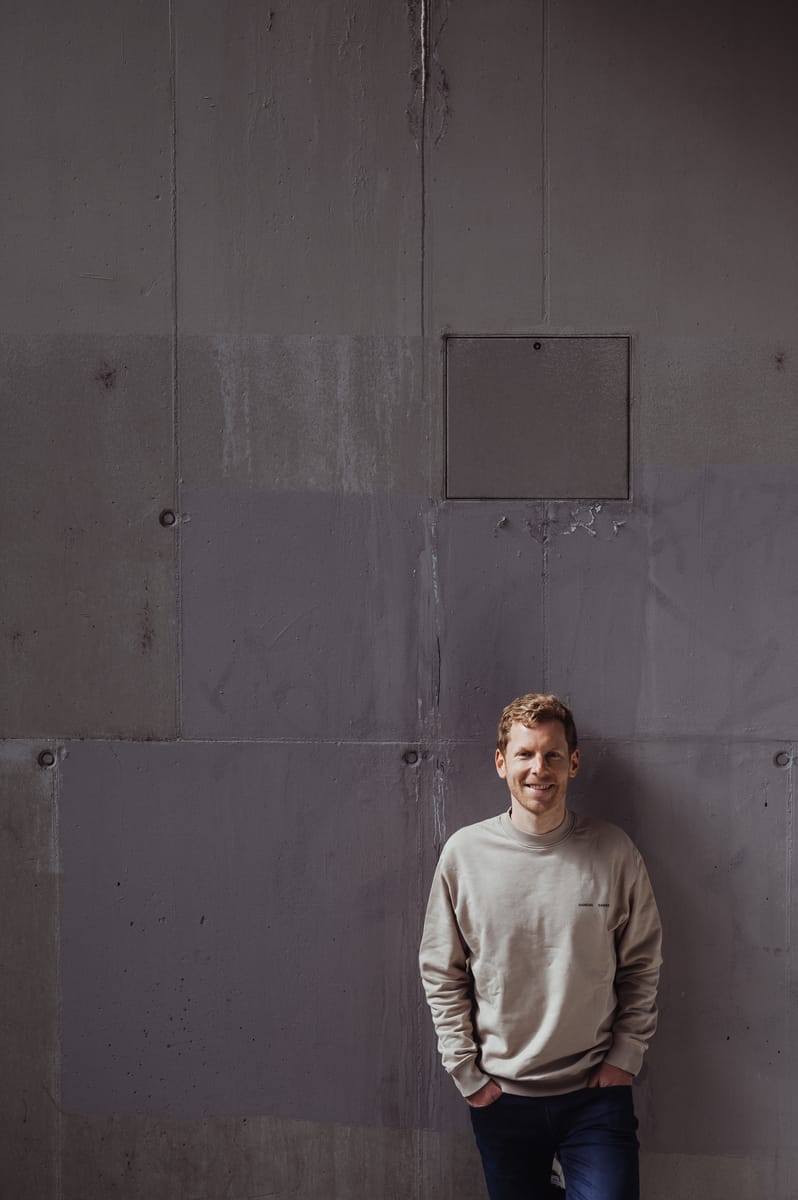
Today’s guest is Andreas Schwarzenbrunner, Partner at Speedinvest, who has spent over a decade investing in early-stage European startups and scaling the firm across Vienna, Berlin, London, Paris, and Munich. He focuses on leading early rounds and supporting founders through the first 3–5 years of company building.

🎧 Tune in now on SpotifyAppleYouTube and share your thoughts! In the meantime: Follow the Gradient and stay tuned!

🫶🏼 Melanie & Christian

PS: Has this e-mail been forwarded to you? Sign up here.

Why you should listen

You should listen to this if you want to understand why Europe consistently produces top-tier technical talent but fails to retain and scale its biggest AI opportunities.

As the conversation unfolded, the tension between capital availability and regulatory fragmentation became clear as the core constraint holding back European tech.

What we talk about

  • 00:00 - Introduction

  • 01:32 - The Peter Steinberger moment and what Europe missed

  • 06:20 - The 0.1 percent vs 3 percent pension fund gap, explained

  • 10:51 - How European money flows to Sandhill Road and back at a markup

  • 16:48 - EU Inc, public procurement, and the 28th regime

  • 26:18 - What European founders do differently

Our main take away’s

  1. Capital is the single bottleneck that explains most of Europe’s startup gap. European pension funds allocate around 0.1% to venture compared to roughly 3% in the US, creating a 25x gap that directly limits late-stage funding and forces founders to look abroad.

  2. Europe is indirectly financing its own competitive disadvantage. Large parts of European institutional capital flow into US venture funds, which then reinvest into European companies at later stages, capturing upside that could have stayed local.

  3. Regulatory fragmentation, not regulation itself, is the real growth killer. Founders face 27 different national systems, making expansion in Europe as complex as entering the US, which slows scaling and discourages early ambition.

  4. Europe’s talent gap is not about engineers but about scaling experience. The region produces strong technical and research talent, but lacks operators who have taken companies to billion dollar scale, forcing startups to import leadership from US tech ecosystems.

  5. Constraints in Europe create disciplined companies but delay outcomes. Founders learn to operate with less capital and think internationally from day one, but this comes at the cost of slower scaling and reduced room to compete when massive funding rounds define the market.

How to reach out to Andreas

Exclusive from Andreas

What is one signal in the first meeting that makes you lean in on a founder?

Visible energy and excitement for what they are trying to build.

What is a “false positive” you’ve learned to ignore when evaluating startups?

Shiny decks and CVs are good to raise a round in the beginning, but building a successful company long term needs very specific personality traits and skills.

Where do you see founders consistently wasting time or money in the first 12–18 months?

Time definitely on self promotion as by now many founders think they at the same time need to be an influencer. As long as it does not pay into either hiring the best people or attracting customers it is a waste of time in my view. Money on fancy offices and cool merch. That is still something that I often do not fully understand for early stage companies in the first 1-2 years.

What books, podcasts, articles inspired you?

That is a tricky one and inspired is a high bar. I love to read so many books. What inspires me are often biographies about interesting people that drive humanity forward. Recently the one by Sebastian Mallaby on Demis Hassabis and DeepMind. Or the Autobiography by Jens Stoltenberg, former Secretary General of NATO. A lot of interesting background stories. I always realize that although we sometimes do not believe it, individuals can change the world.
On podcasts I love Interview formats in general. Shows I like are Intelligence Squared, In Good Company, Invest like the Best, Everything from the Economist and FT, Odd Lots, The Rest is Politics and Alles Gesagt by Die Zeit.

What’s one advice, founders should actually ignore?

That constantly raising more money and going from round to round is the best way to do it. In many cases this is not true and rather kills the business. Only in rare cases this is a successful strategy.

What are habits, activities or rituals that keep you sane (while scaling your business)

For me it is rather the obvious things than something special. Cycling, and Sport in general, reading, strawling through my neighbourhood in Paris and trying great food. Sit in the sun and have a great time with friends. Get enough sleep and eat well even in stressful times with lots of travels. And mentally see things in perspective and always remind yourself about the great things you experienced or achieved.

What is one “growth hack” (be it business, health or personal-wise) that has a positive impact on you or the company?

Finding your circle of competence where you are really good at and scale that.

Follow the Gradient is a weekly newsletter and podcast by the serial founders Melanie Gabriel & Christian Woese about how to scale a business from Europe while staying sane.

You have full control over what we send to you. We sent a weekly rundown on Tuesdays, and our podcast brief on Thursdays. If you do not want to receive this Thursday one, you can change this in the email preferences below.

Reply

Avatar

or to participate

Keep Reading